5 Signs Your Car Battery Is Dying in Wytheville, VA
There is rarely a convenient time for a car battery to die. It usually happens on a cold morning in the Walmart parking lot on East Main Street, or at a rest area off I-77 when you are already running late. The good news is that a battery almost never fails without warning. It sends signals for days or weeks before it finally leaves you stranded, and once you know what to look for, you can replace it on your schedule instead of on the shoulder of I-81.
At Wytheville Towing we run jump starts and battery tows across Wytheville and all of Wythe County every week, and the same complaint comes up again and again: "It was fine yesterday." In almost every case, the warning signs were there. This guide walks through the five clearest signs your car battery is dying, why our local roads and weather wear batteries out faster, and exactly what to do when yours finally gives up.
Why car batteries fail faster around Wytheville and Wythe County
Battery life is shaped by where and how you drive. A standard 12-volt battery is rated for roughly three to five years, but conditions in the New River Valley push many drivers toward the shorter end of that range. Winter mornings in Wytheville regularly drop below freezing, and cold slows the chemical reaction inside a battery so it delivers less cranking power exactly when the engine needs the most. Heat is just as hard on it: summer temperatures bake the fluid inside and speed up internal corrosion.
Terrain matters too. If most of your driving is short hops around town, up and down the grades near Big Walker Mountain, or quick runs to Rural Retreat and Fort Chiswell, your alternator may never get enough sustained highway time to fully recharge the battery. Every cold start pulls a big chunk of power out, and a ten-minute trip does not always put it all back. Over a Wythe County winter, that shortfall adds up until the battery simply cannot hold a charge anymore.
Sign 1: A slow, struggling engine crank
The single most common warning sign is a slow crank. When you turn the key or press start, the engine turns over lazily instead of firing right up. It sounds like the starter is dragging, almost like the engine is tired. That drag means the battery no longer has the amperage to spin the starter at full speed.
Pay close attention to cold mornings. A weak battery might start the car fine at noon but barely turn over at 6 a.m. If you have caught yourself thinking "that took a second longer than usual," that is your battery telling you it is on the way out. A slow crank rarely improves on its own; it gets worse until one morning the engine does not catch at all.
Sign 2: Dim headlights and flickering dashboard lights
Your electrical system runs on the battery until the engine is going, so a dying battery shows up in your lights first. Watch for headlights that look dim or yellowish when the car is idling, then brighten as you rev the engine. Interior dome lights, dashboard displays, and the radio may flicker or reset when you start up. Power windows and locks may move slower than they used to.
These symptoms tell you the battery is struggling to deliver steady voltage. It is easy to shrug off a flickering dash light, but combined with a slow crank it is a strong sign the battery is near the end. According to AAA, most drivers ignore these early electrical clues right up until the car will not start at all.
Sign 3: A clicking noise when you turn the key
If you turn the key and hear a rapid clicking sound instead of the engine cranking, the battery is almost certainly the culprit. That click is the starter solenoid trying to engage without enough current behind it. Sometimes you get a single loud click, sometimes a machine-gun series of them. Either way, the battery does not have the power left to do its job.
A clicking no-start is often the final stage before a completely dead battery. If a jump start brings the car back to life immediately, that confirms the battery, not the starter, was the problem. If your car is clicking in a parking lot anywhere in Wytheville, our roadside team can be there fast to test it and get you moving.
Sign 4: A swollen battery case or a rotten-egg smell
Some battery warnings you can see and smell. Pop the hood and look at the battery case. If the sides look bloated, warped, or swollen, heat has damaged the cells and the battery needs to be replaced, not recharged. A swollen case is common after a hot Virginia summer and is not something to drive on.
Your nose can help too. A dying or leaking battery can vent hydrogen sulfide, which smells like rotten eggs or sulfur near the engine bay. You may also spot a crusty, white or bluish powder built up on the battery terminals, which is corrosion blocking the flow of power. Corroded terminals sometimes just need a cleaning, but paired with a swollen case or a bad smell, they point to a battery that is failing internally. Never smoke or bring a flame near a battery that smells like sulfur.
Sign 5: The battery is over three years old and needs frequent jumps
Age alone is a warning sign. If your battery is more than three years old, it is living on borrowed time and any of the symptoms above should be taken seriously. Check the date sticker on top of the battery, or ask a shop to read its build date. Many drivers in Wytheville do not know how old their battery is until it strands them.
The clearest signal of all is needing repeat jump starts. If you have been jumped once, the battery may have simply run down from lights left on. But if you are getting jumped every few days, the battery can no longer hold a charge and is done. Replacing it is far cheaper and less stressful than another breakdown on US-11 or at the I-77 and I-81 junction near Reed Creek.
What to do when your battery dies in Wytheville
If your car will not start, stay calm and get somewhere safe. If you are on the road, ease onto the shoulder, well clear of traffic on I-77 or I-81, and switch on your hazard lights. Turn off the radio, climate control, and any accessories to save whatever charge remains for one more start attempt.
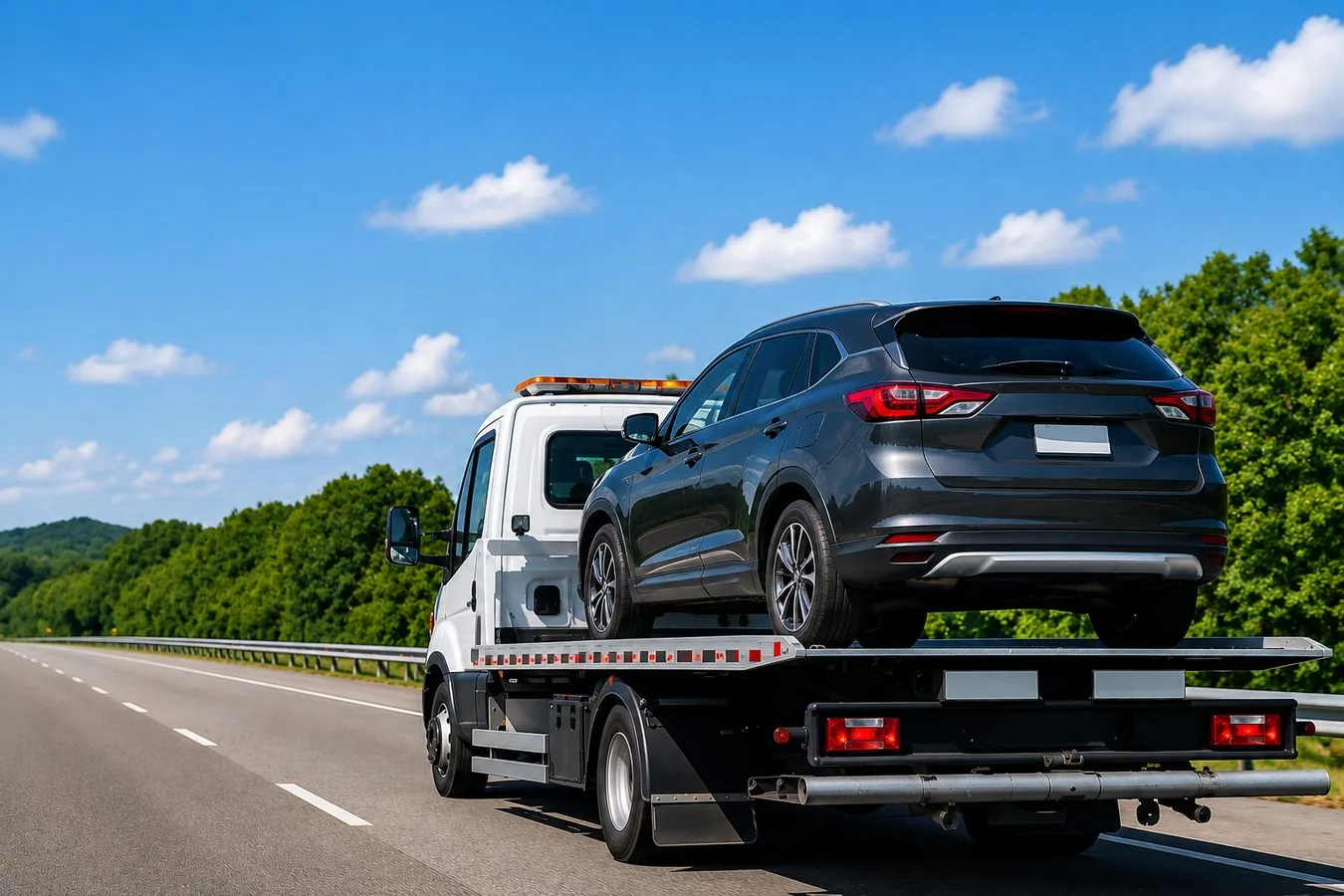
From there you have two paths. If the battery still has some life, a jump start on the spot will get the engine running so you can drive to a shop and have it tested or replaced. If the battery is completely dead, physically damaged, or the charging system has failed, a jump will not hold and you need a tow. Our licensed and insured operators run DOT compliant flatbed and wheel-lift trucks that can safely load your vehicle and deliver it to your mechanic, dealership, or home. We also handle winch-out recovery if a breakdown left you off the pavement in a ditch or soft shoulder.
Wytheville Towing serves Wytheville, Rural Retreat, Fort Chiswell, Max Meadows, Austinville, Speedwell, Ivanhoe, and the rest of Wythe County, ZIP 24382 and beyond. We are available 24 hours a day, seven days a week, with a typical response time of 30 to 45 minutes. Whether you need a two-minute jump start or a full battery tow, one call gets a real local truck on the way.
Dead Battery? We Come to You, 24/7
Jump starts and battery towing across Wytheville and all of Wythe County. Fast, licensed, and insured.
Call (615) 241-0232Frequently Asked Questions
How long should a car battery last in Wytheville, VA?
Most car batteries last three to five years. In the Wythe County area, cold winter mornings and short mountain trips around Big Walker Mountain can shorten that lifespan, so many local drivers replace their battery closer to the three year mark. If your battery is over three years old and slow to crank, have it tested.
Can Wytheville Towing jump start my car or do I need a tow?
Both. If the battery still holds a charge, our roadside team can deliver a fast jump start on the spot anywhere in Wytheville or along I-77 and I-81. If the battery is fully dead or the charging system has failed, we provide flatbed and wheel-lift battery towing to your shop or home. We are available 24/7 with a typical 30 to 45 minute response.
When did you last have your battery tested, and did any of these warning signs sound familiar?